TL;DR
- At-home: safe when shallow + sterile—best for mild glow/texture.
- In-clinic: better for scars, deeper lines, bigger results with expert depth control.
- Main difference: depth + hygiene + technique (deeper = higher risk).
- Don’t DIY if you’re getting frequent bleeding or strong downtime.
- Skip entirely with active acne, irritation/infection, sunburn, keloids, or cold sore risk.
- Aftercare counts: keep it simple, avoid actives 24–48 hrs, wear SPF.
What You Can Safely Do Yourself
Microneedling is one of those treatments that looks deceptively simple: tiny needles, a quick pass over the skin, and—supposedly—smoother texture, softer lines, and fading discoloration over time. But the difference between “safe and helpful” and “irritating or risky” comes down to three things:
- Depth (how far needles enter the skin)
- Sterility (how clean the device + environment are)
- Technique + aftercare (how you use it and what you do afterward)
This guide breaks down microneedling at home vs clinic so you know what’s realistic, what’s worth paying a pro for, and what you should never DIY.
Quick safety note: This is cosmetic education, not medical advice. If you have a skin condition, a history of keloids, frequent cold sores, or you’re unsure what depth/device you have, talk with a board-certified dermatologist before needling.
What microneedling actually does (in plain English)
Microneedling creates controlled micro-channels in the skin. In clinical settings, this can trigger a wound-healing response that supports collagen remodeling (helpful for texture, fine lines, and some scars). The tradeoff: the deeper you go, the more results you might get—and the higher the risk of complications if anything is off (pressure, sanitation, needle quality, aftercare).
The American Academy of Dermatology (AAD) specifically warns that at-home microneedling can lead to irritation, infection/scarring, and can spread viruses like herpes or warts across the skin if you’re susceptible. (American Academy of Dermatology)
The FDA also emphasizes safe use practices (cleaning per manufacturer instructions, don’t share devices, and be mindful of infection risk). (U.S. Food and Drug Administration)
At-home vs in-clinic microneedling: the real differences
1) Needle depth (the biggest divider)
- At home: Most people should stay in the very shallow range—think “cosmetic stimulation + product penetration,” not aggressive collagen remodeling. Once you’re regularly causing bleeding or significant swelling, you’re moving into “risk climbs fast” territory.
- In clinic: Professionals may use deeper settings depending on the concern and the area. Published dermatology literature commonly discusses 0.5–1.0 mm ranges for wrinkles/aging in controlled contexts, with pain and risk increasing with depth. (PMC)
Translation: deeper work belongs in professional hands.
2) Sterility and cross-contamination control
Clinics use medical-grade disinfection protocols, single-use cartridges (for pens), and controlled environments. At home, the weak point is almost always device hygiene and handling—which is why infection and virus-spread are repeated warnings from dermatology authorities. (American Academy of Dermatology)
3) Device type and consistency
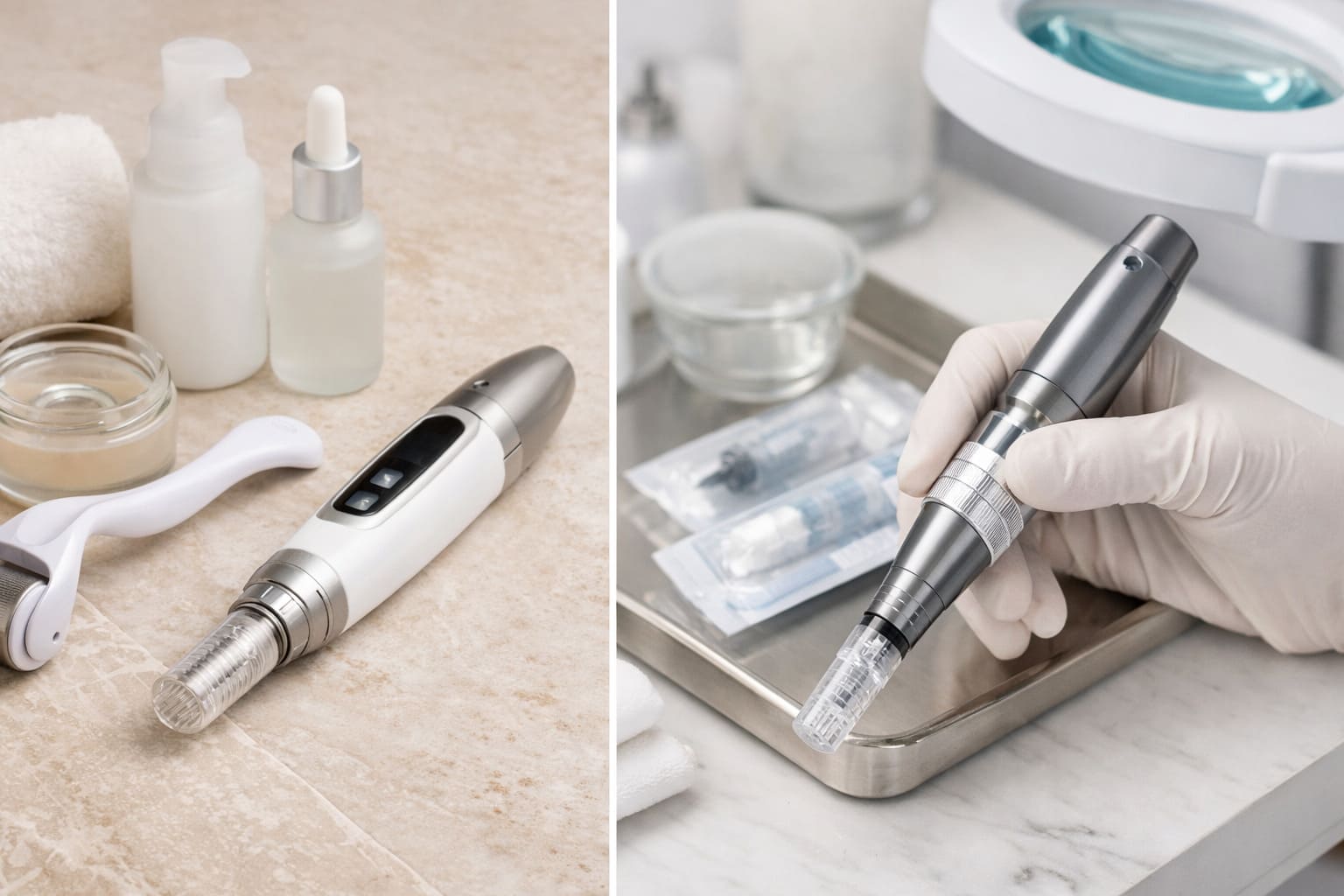
- Clinic: Medical microneedling pens stamp vertically and more consistently; pros can adjust depth by zone (forehead ≠ cheeks ≠ around mouth).
- Home: Rollers can “drag” at angles (higher irritation potential). Pens can be used at home, but the risk rises if you’re using deeper needles or questionable cartridges.
4) Results + downtime
- At home: Subtle, cumulative improvements (glow, smoother feel, better-looking pores/texture) when done gently and consistently.
- In clinic: Stronger results for acne scarring, deeper wrinkles, significant texture, often with a more intense recovery window.
Microneedling depth at home: what’s generally safest?
There’s no single “universal safe depth” for everyone—skin thickness varies by area and person. But if your goal is safe DIY cosmetic microneedling, the safest practical rule is:
✅ At-home: keep it shallow and avoid bleeding
- 0.25 mm: Often used for very superficial treatment and to enhance topical absorption.
- 0.5 mm: Sometimes used for cosmetic texture support, but technique must stay gentle—pressure matters as much as length.
Once you get into deeper ranges often discussed for clinical wrinkle/scar remodeling (e.g., 0.5–1.0 mm in published clinical contexts), that’s where professional oversight becomes much more important. (PMC)
And remember: the AAD warns that some at-home devices can pierce the skin and raise infection/scarring risk—especially if you press too hard or overdo frequency. (American Academy of Dermatology)
Is at-home microneedling safe?
It can be—if you treat it like a hygiene procedure and keep it shallow and infrequent.
At-home microneedling is more likely to be safe when:
- You use a reputable device with sterile, single-use components (or a device designed to be properly disinfected)
- You needle gently (no aggressive pressure)
- You don’t do it too often (overuse = irritation and worse outcomes)
- You avoid it entirely when you have active acne, eczema flare, cold sore risk, warts, or any skin infection
AAD specifically calls out risks like irritation from overuse, accidental spreading of viruses (warts/herpes), and infection/scarring when skin is pierced. (American Academy of Dermatology)
FDA guidance also emphasizes cleaning the device as directed and never sharing it to reduce infection risk. (U.S. Food and Drug Administration)
Microneedling pen vs professional: what you’re paying for
A professional microneedling session isn’t just “a pen with longer needles.” You’re paying for:
- Proper depth selection by facial zone
- Better control over pressure and passes
- Clinical-grade sterility
- Screening for contraindications (cold sores, active breakouts, pigment risk, medications, etc.)
- Stronger protocols for complications
A 2021 safety review in the dermatology literature found microneedling is generally “relatively safe” with mostly mild, temporary effects—but noted risk factors (like infections, skin type considerations, allergies) that matter when deciding DIY vs professional. (PubMed)
Difference between salon and home microneedling (and why it matters)
This varies a lot by location and licensing rules, but as a consumer, the safest way to think about it is:
- Home: You control hygiene and depth (often shallow). Your biggest risk is user error + contamination.
- Salon/spa: Quality ranges widely. Some offer “cosmetic needling” at shallow depths, but sanitation standards and training are inconsistent across businesses.
- Medical clinic/dermatology office: Best choice for deeper treatments, scar work, pigment-prone skin, and complication management.
If someone is offering deep microneedling or advanced combination devices (like RF microneedling), you want a setting that treats it as a medical procedure with appropriate oversight (the FDA has highlighted safety considerations for microneedling devices and proper use). (U.S. Food and Drug Administration)
What you can safely do yourself: a practical at-home protocol
Before you start (do this every time)
- Do not needle if you have: active acne lesions, rash, sunburn, infection, open cuts, recent cold sore, warts, or a history of keloid scarring.
- Cleanse skin thoroughly.
- Use only sterile/single-use cartridges when applicable.
- Disinfect/clean your device exactly as the manufacturer instructs (FDA explicitly advises cleaning between uses and not sharing). (U.S. Food and Drug Administration)
During
- Use light pressure.
- Avoid lingering in one spot.
- Avoid sensitive zones if you’re not trained (eyelids, very close to lash line, etc.).
- If you’re bleeding regularly, you’re likely going too deep/too hard for DIY.
Aftercare (the “don’t mess this up” phase)
For the first 24–48 hours:
- Keep it simple: bland hydration + barrier support
- Skip: acids, retinoids, scrubs, fragranced products, heavy makeup
- Be strict with sunscreen (post-inflammation dark marks are more likely when skin is irritated)
If you’re shopping for skin-friendly support products, you can browse Shop microneedling serums and boosters for options designed to pair with cosmetic treatments.
And if you’re looking to upgrade your tools responsibly, Shop devices and supplies for treatments.
When to skip DIY and book a clinic
Choose in-clinic microneedling if you have:
- Moderate to deep acne scarring
- Significant texture concerns
- Melasma or pigment that worsens easily
- Frequent cold sores (herpes simplex)
- Any condition where you’d want medical screening first
And get medical help promptly if you develop signs of infection (worsening redness, increasing pain, pus, fever) after needling.
FAQ
“Can at-home microneedling build collagen like clinic treatments?”
At-home can support mild cosmetic improvement, but deeper collagen remodeling is more reliably achieved in clinical protocols where depth, sterility, and technique are controlled.
“How often can I microneedle at home?”
Overuse is a common problem—AAD warns that microneedling too often can irritate skin and make concerns more noticeable. (American Academy of Dermatology) A conservative schedule (less frequent, gentle sessions) is typically safer than chasing fast results.
“What’s the biggest mistake people make?”
Pressing too hard and treating it like exfoliation—AAD notes that pressing too hard can damage skin and lead to scarring or texture/color changes. (American Academy of Dermatology)
Bottom line: microneedling at home vs clinic
- At home: keep it shallow, gentle, sterile, and infrequent for modest improvements and maintenance.
- In clinic: best for deeper concerns (scars, significant texture, stronger collagen goals) and for anyone who wants the lowest risk path to meaningful change.